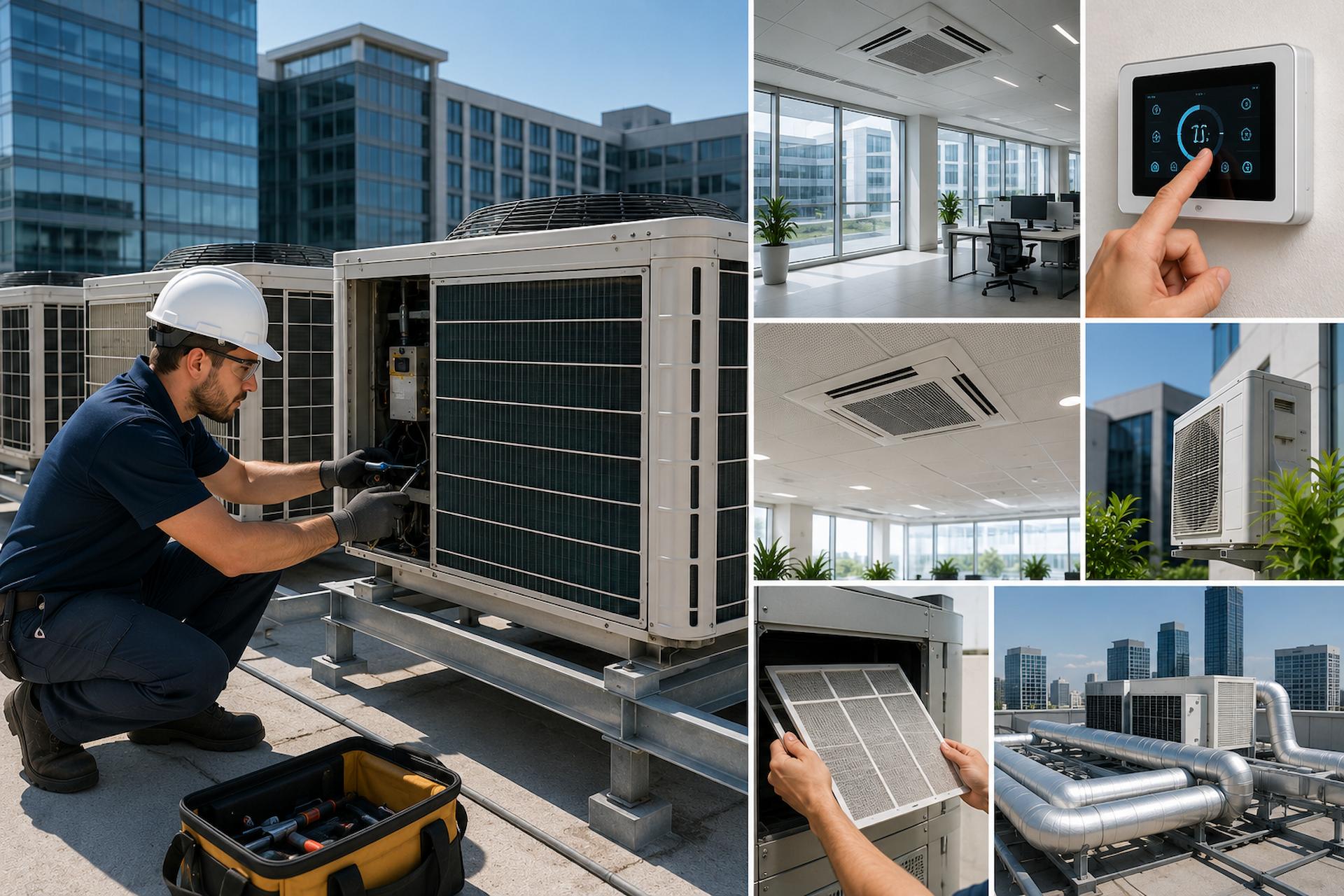
As energy costs continue to rise and sustainability targets become increasingly central to business operations, building managers and facility teams are under growing pressure to reduce their environmental footprint without compromising on comfort. Heating, ventilation, and air conditioning systems are among the largest consumers of energy in commercial buildings — in many cases accounting for more than 40 per cent of total electricity use. Finding smarter, more efficient ways to manage these systems is not merely a cost-saving exercise; it is fast becoming a matter of corporate responsibility.
Whether you are retrofitting an older property or specifying systems for a new development, understanding the latest best practices can make a meaningful difference. Investing in high-quality commercial air conditioning solutions — and operating them intelligently — can deliver substantial savings over the lifetime of a building. Below, we outline the most effective strategies for improving energy efficiency in modern commercial environments.
Understanding Your Current Energy Baseline
Before making any changes, it is essential to understand how your existing system is performing. An energy audit — carried out by a qualified engineer — will identify inefficiencies, highlight areas of excessive consumption, and provide a clear baseline from which improvements can be measured. Many businesses discover that their systems are oversized for their actual needs, running continuously when intermittent operation would suffice.
Monitoring tools and smart sub-metering can also provide real-time data on energy use, allowing facility managers to spot anomalies quickly and respond before minor inefficiencies become costly problems. This data-led approach is the foundation of any serious efficiency strategy.
Choosing the Right System for the Building
Not all buildings have the same thermal demands, and selecting the appropriate type of system matters considerably. Variable Refrigerant Flow (VRF) systems, for instance, are particularly well suited to larger commercial premises because they can simultaneously heat and cool different zones, adjusting output to match the precise requirements of each area. This avoids the energy waste associated with blanket heating or cooling of an entire floor when only part of it is occupied.
Heat pump technology has also advanced significantly in recent years, offering efficient alternatives to traditional systems, particularly in buildings where both heating and cooling are required throughout the year. When specifying or upgrading a system, always look for units with high Seasonal Energy Efficiency Ratio (SEER) ratings — this figure reflects real-world performance across varying conditions, rather than just peak efficiency.
Key Operational Strategies to Cut Energy Use
Even with an efficient system in place, poor operational habits can quickly erode any gains. The following measures are among the most impactful for reducing energy consumption without affecting occupant comfort:
Set appropriate temperature bands. Cooling to 22°C when 24°C would be comfortable is a common and costly error. Adjusting setpoints by just one or two degrees can reduce cooling energy by up to eight per cent.
Use programmable or smart controls. Scheduling systems to power down outside of working hours — including evenings, weekends, and bank holidays — prevents energy being wasted on empty spaces.
Implement occupancy-based controls. Presence sensors linked to the air conditioning system can automatically reduce output in unoccupied zones, a particularly effective approach in open-plan offices with flexible working patterns.
Maintain consistent filter cleaning. Dirty filters force units to work harder to circulate air, increasing energy consumption and accelerating wear on components. Monthly checks during peak usage periods are advisable.
Avoid simultaneous heating and cooling. In buildings with mixed systems, it is surprisingly common for heating and air conditioning to run concurrently in adjacent zones. Reviewing zoning configurations regularly can eliminate this hidden waste.
The Role of Building Fabric and Insulation
Air conditioning does not operate in isolation — the thermal performance of the building itself has a direct bearing on how hard any system must work. Well-insulated walls, double or triple glazing, and effective solar shading all reduce the heat gain that a cooling system must counteract. In older commercial buildings, draughts around windows and poorly sealed service penetrations can account for a surprising proportion of energy loss.
Incorporating passive cooling strategies — such as natural ventilation paths, green roofs, or external shading devices — can meaningfully reduce the load placed on mechanical systems during the summer months. These building fabric improvements typically represent a long-term investment, but one that pays dividends for decades.
Planned Maintenance as an Efficiency Tool
Routine maintenance is often treated as a compliance obligation rather than an efficiency measure — but the two are deeply connected. A well-maintained commercial air conditioning system will consistently outperform a neglected one, both in energy use and in longevity. Refrigerant leaks, worn fan belts, and blocked condensers all place additional strain on compressors, driving up running costs and shortening equipment life.
Establishing a planned preventative maintenance schedule — typically with two service visits per year, timed before the peak summer and winter seasons — gives engineers the opportunity to identify and address minor issues before they escalate. Under F-Gas regulations, systems containing certain refrigerants are also legally required to be inspected at regular intervals, making scheduled servicing a legal as well as a practical necessity.
Upgrading to Smarter Technology
Building Management Systems (BMS) have transformed how facility teams manage energy across large commercial premises. By integrating air conditioning controls with lighting, blinds, and other building services, a BMS enables a holistic approach to energy management — automating responses to weather forecasts, occupancy data, and electricity tariff fluctuations. Some systems can even pre-cool a building during off-peak hours, reducing demand during expensive peak periods.
Cloud-connected systems with remote monitoring capabilities also allow engineers to diagnose faults and adjust settings without an on-site visit, reducing downtime and service costs. As technology continues to evolve, the gap in efficiency between older uncontrolled systems and modern intelligent ones will only widen.
Conclusion
Improving the energy efficiency of air conditioning in commercial buildings is rarely a single action — it is the result of better system selection, smarter controls, thorough maintenance, and an improved building envelope working together. Each element reinforces the others, and the cumulative effect can be substantial.
For businesses looking to reduce operating costs, meet sustainability commitments, and future-proof their facilities, reviewing the performance of their commercial air conditioning infrastructure is an excelleAir Conditioningnt starting point. The investment in expert advice and quality equipment will almost always pay for itself — and often far sooner than expected.