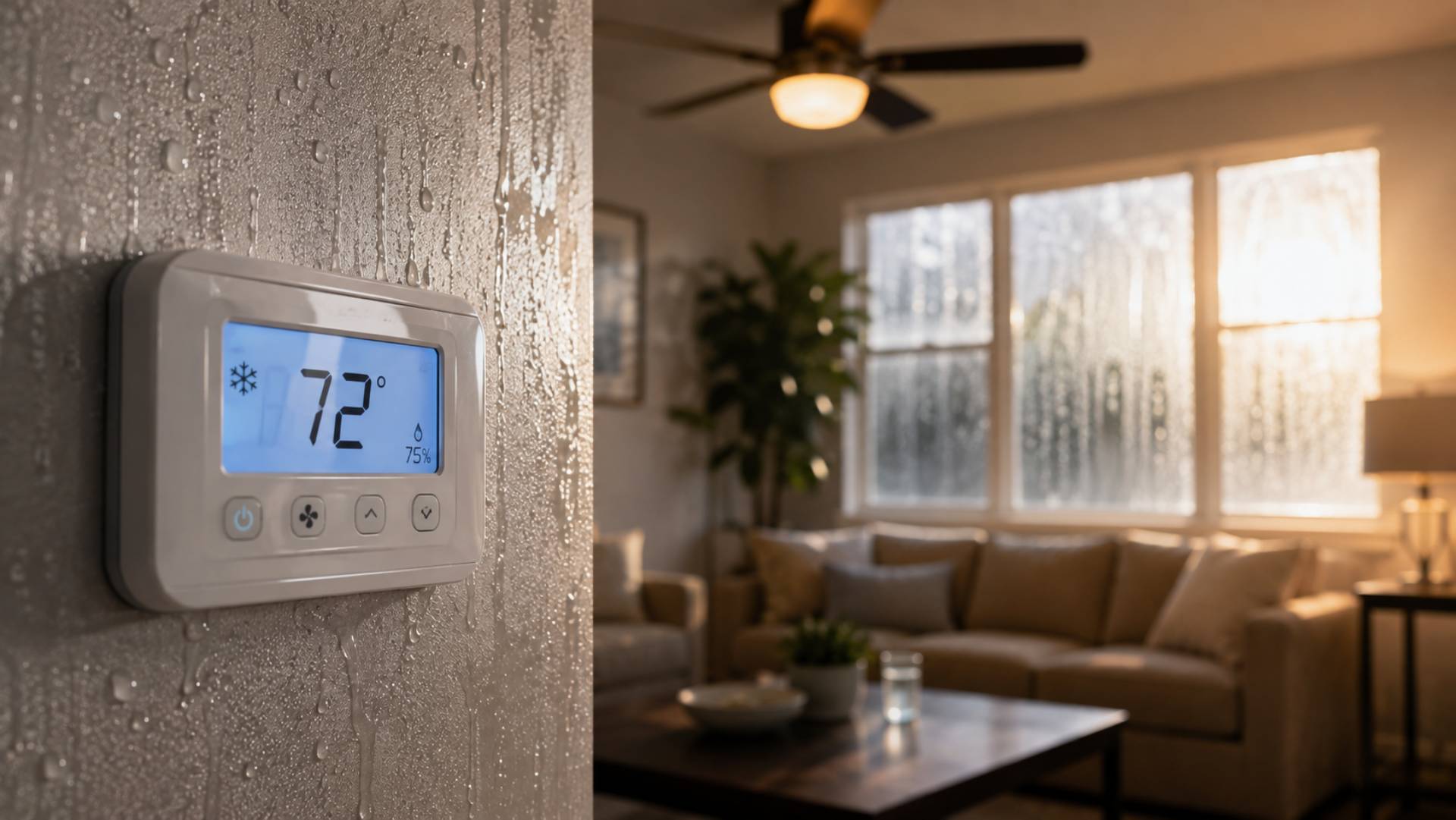
A home can feel warm and uncomfortable even when the thermostat is set to a low temperature. In many cases, the real problem is not the temperature itself but the amount of moisture in the air. During air conditioning during humid summers, humidity can make indoor spaces feel sticky, clammy, and less comfortable even when the cooling system appears to be working normally.
Understanding the relationship between temperature, humidity, and your HVAC system can help explain why lowering the thermostat does not always solve the problem. It can also help homeowners recognize when simple adjustments may be enough and when the cooling system needs professional attention.
Temperature and Humidity Are Not the Same Thing
Your thermostat measures temperature, but it does not directly measure how much moisture is present in the air. This distinction is important because two rooms with the same temperature can feel completely different depending on their humidity levels.
For example, a room maintained at 72°F with moderate humidity may feel cool and comfortable. The same room at 72°F with excessive moisture can feel noticeably warmer and heavier.
High humidity reduces the body’s ability to cool itself through evaporation. Sweat does not evaporate as efficiently when the air is already holding a significant amount of moisture. As a result, the room may feel warmer and stickier than the thermostat reading suggests.
This is why simply lowering the temperature may not address the underlying comfort issue.
Why Air Conditioners Help Control Humidity
An air conditioner does more than cool indoor air. As warm air passes over the system’s cold evaporator coil, moisture in the air can condense on the coil and drain away. This process helps reduce indoor humidity while the system is cooling the home.
However, humidity control depends on how the system operates. If an air conditioner runs only briefly before reaching the thermostat’s temperature setting, it may not have enough time to remove a substantial amount of moisture.
This can happen when a system is oversized for the home. A larger unit may cool a space very quickly, causing frequent short cycles. While the temperature reaches the desired setting, the system may not run long enough to provide effective dehumidification.
The result can be a home that is technically cool but still feels damp.
An Oversized HVAC System Can Create Comfort Problems
Many homeowners assume that a larger air conditioner is automatically better. In reality, the system needs to be appropriately matched to the home’s cooling requirements.
An oversized unit can reach the thermostat setting quickly and shut down before completing a longer cooling cycle. This may lead to several noticeable issues, including inconsistent temperatures, frequent cycling, and elevated indoor humidity.
By comparison, a properly sized system generally has a better opportunity to run for longer cycles when conditions require it. This allows it to remove heat and moisture more effectively.
If your home frequently feels sticky despite a low thermostat setting, HVAC sizing may be worth discussing with a qualified technician.
Poor Airflow Can Make the Problem Worse
Humidity problems are not always caused by the air conditioner itself. Restricted or inadequate airflow can also affect indoor comfort.
A dirty air filter, blocked return vent, closed supply registers, or problems with ductwork can interfere with the movement of air through the system. When airflow is compromised, the HVAC system may struggle to distribute conditioned air evenly throughout the home.
Some rooms may feel comfortable while others remain warm and humid. You might also notice that certain areas, such as bedrooms, bathrooms, basements, or rooms with limited ventilation, feel noticeably more damp.
Replacing a dirty filter and keeping supply and return vents unobstructed are simple maintenance steps that can support proper airflow. Persistent airflow problems, however, may require a professional inspection.
Everyday Activities Add Moisture Indoors
Sometimes the HVAC system is functioning properly, but the home is still receiving more moisture than the system can comfortably manage.
Everyday activities can contribute to indoor humidity. Cooking, showering, washing clothes, drying laundry indoors, and even breathing release moisture into the air. Without adequate ventilation, that moisture can accumulate.
Bathrooms and kitchens are especially important areas to consider. Using exhaust fans while showering or cooking can help move moisture outside instead of allowing it to spread throughout the house.
Keeping doors and windows closed while the air conditioner is running can also help prevent humid outdoor air from entering unnecessarily.
Check for Sources of Excess Moisture
If a home remains unusually humid, it is worth looking beyond the thermostat and HVAC equipment.
Leaks around plumbing fixtures, roofs, windows, or foundations can introduce unwanted moisture. Poorly ventilated crawl spaces and basements may also contribute to a damp indoor environment.
Condensation around windows or persistent musty odors can sometimes indicate a moisture problem that needs further investigation.
Addressing the source is important because an air conditioner should not have to compensate indefinitely for a separate moisture issue within the home.
When a Dehumidifier May Help
In particularly humid environments, a dedicated dehumidifier can provide additional moisture control. These systems are designed specifically to remove water from indoor air, making them useful when humidity remains high even though the temperature is comfortable.
A whole-home dehumidifier may be appropriate for some properties, while a portable unit may be sufficient for a smaller problem area. The right solution depends on the home’s size, construction, climate, and existing HVAC setup.
It is generally better to identify why humidity is excessive before simply adding another appliance. Otherwise, the underlying issue may continue.
Signs Your HVAC System May Need Attention
A consistently sticky home can be an early indication that the cooling system is not operating as efficiently as it should. Homeowners should pay attention to signs such as unusually frequent cycling, weak airflow, uneven temperatures, water around the indoor unit, or indoor humidity that remains high despite regular air conditioning use.
Unusual noises, unexpected increases in energy use, and rooms that never seem to cool properly can also justify an inspection.
Routine HVAC maintenance can help identify issues before they become larger problems. A technician can evaluate airflow, system performance, refrigerant-related concerns, drainage, and other components that affect cooling and moisture removal.
Conclusion
When a home feels sticky, lowering the thermostat may seem like the obvious solution. But temperature is only one part of indoor comfort. Humidity, airflow, system sizing, ventilation, and moisture sources can all influence how a room feels.
A comfortable home should feel reasonably cool without feeling damp or clammy. If the thermostat is already set low and the indoor environment still feels humid, the better approach is to look at the whole system rather than continuing to lower the temperature.
By keeping humidity under control, maintaining good airflow, addressing moisture sources, and making sure the HVAC system is operating properly, homeowners can create a more comfortable indoor environment without unnecessarily pushing the thermostat lower.